
Replacing Thermostatic Expansion Valves
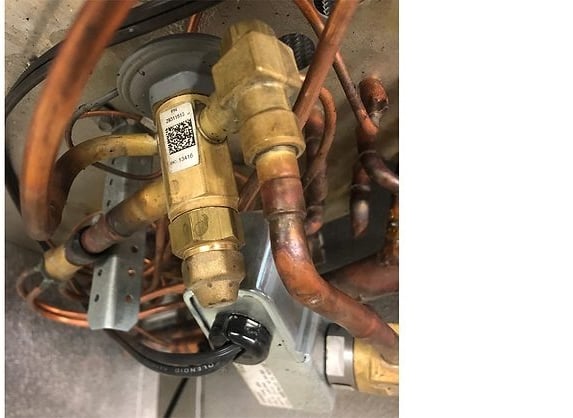
When replacing a thermostatic expansion valve it is usually easiest to replace the valve with the same make and model. However, there may be times when the original make and model is not readily available, so a replacement needs to be chosen. Choosing a replacement valve that matches the original capacity, body type, type of equalization and operating characteristics is important to ensure a proper operating system.
Choosing a replacement TEV with the same capacity requires a technician to refer to the selection tables of the replacement valve manufacturer. To determine the correct capacity for a replacement TEV, the technician must know the following:
the BTU capacity of the system;
the type of refrigerant used in the system;
the pressure drop across the valve;
the liquid refrigerant temperature entering the valve; and
the evaporator temperature.
Most selection tables will list the capacity of their valves in tons of refrigeration under various system conditions as listed above.
When determining the pressure drop, the valve and the liquid entering temperature, a technician should use the worst case values.
The technician then needs to match the body type of the new valve to the original valve. Make sure that the inlet and outlet connection sizes and style match the original and are located in a position that will not make its installation too difficult.
The type of equalization also needs to be matched. If an internally equalized valve is used then the replacement valve must also be internally equalized. If an external equalizer valve is used then an external equalizer valve must be used.
Lastly, the technician needs the make sure the replacement’s power element matches the operating characteristics of the original valve. There are several styles of power elements to chose from. Choosing the right one may require understanding the differences between the various charges and how they affect the system’s operating performance. Referring to the manufacturer’s catalog will usually give a detailed explanation of the various charges available.
Once the correct TEV has been chosen the technician needs to install it into the system. If the valve is to be brazed into the system, it is a good practice to wrap the valve body in a wet rag and not direct any heat toward it. When securing the sensing bulb to the suction line always follow the manufacturer’s recommendation for proper location. As a general rule, however, the sensing bulb should be secured to a horizontal section of pipe at the outlet of the evaporator. On pipe sizes 7/8” and larger, it is recommended that the bulb be located at the 4 o’clock or 8 o’clock position. On smaller sized pipe, any area of the pipe except the bottom portion is acceptable. When securing the bulb to the pipe make should it has a good thermal contact, using two straps to fasten the bulb to the pipe.
Always check the superheat setting of the valve once it is installed. Do not rely on the manufacturer’s setting for the system you are working on. Always check and make the necessary adjustments. Let the system run 15 minutes to allow the valve to stabilize before taking any readings or making any adjustments.
Replacing a TEV in generally a simple task; however, it is a time‑consuming repair that should not be rushed.